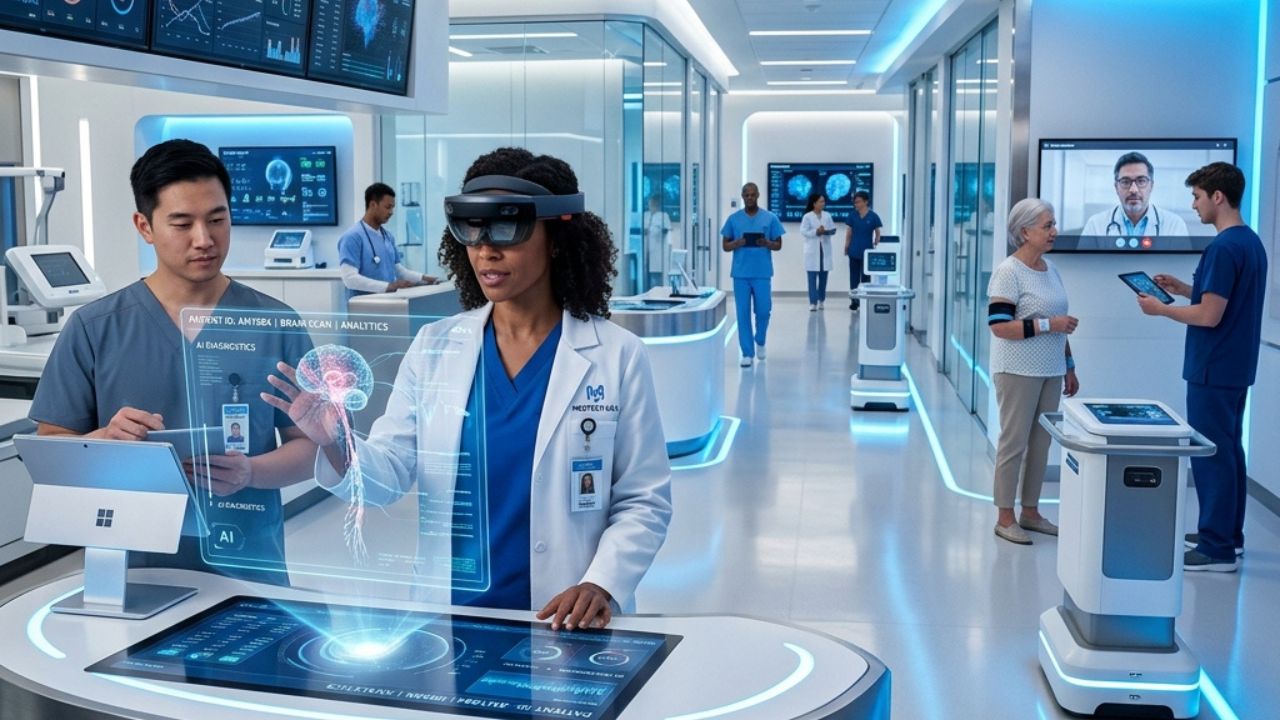
The future of healthcare in the United States is becoming increasingly digital. Hospitals are no longer relying only on doctors, nurses, and medical equipment to deliver quality care. Today, technologies such as artificial intelligence, telemedicine, connected medical devices, and cloud-based systems are changing the way hospitals operate and how patients receive treatment.
A modern digital hospital goes far beyond replacing paper records with electronic files. It creates a connected healthcare environment where patient information, medical devices, clinical teams, and advanced software work together in real time. This allows healthcare professionals to make faster decisions, improve patient safety, reduce administrative work, and deliver more personalized care.
The shift toward digital healthcare has accelerated over the last few years. Hospitals throughout the United States are investing heavily in smart technologies that improve efficiency while helping physicians diagnose illnesses earlier and monitor patients more effectively. Virtual appointments have become common, electronic health records are now standard across most healthcare systems, and artificial intelligence is beginning to support doctors during diagnosis and treatment planning.
Although many hospitals have already embraced digital innovation, the journey is still ongoing. Healthcare organizations continue to expand their technology infrastructure while addressing challenges such as cybersecurity, privacy, and equal access to digital services. As these technologies continue to evolve, digital hospitals are expected to become the foundation of healthcare delivery across the country.
This guide explores the technologies powering digital hospitals, explains how they improve patient care, and examines why they are becoming an essential part of America’s healthcare future.
The Technologies Behind Today’s Digital Hospitals
Digital hospitals rely on several advanced technologies that work together to improve medical care. Each innovation addresses a different part of the healthcare process, from diagnosis and treatment to patient monitoring and hospital management.
Artificial Intelligence Is Enhancing Clinical Care
Artificial intelligence has become one of the most valuable technologies used in modern hospitals. Rather than replacing physicians, AI acts as a powerful decision-support tool that helps medical professionals analyze information more quickly and accurately.
AI software can review medical images such as CT scans, X-rays, and MRIs to identify abnormalities that may require immediate attention. It also analyzes laboratory results, patient histories, medications, and vital signs to help physicians detect health risks before symptoms become severe.
Hospitals are also using AI to automate routine administrative tasks, including appointment scheduling, insurance processing, billing, and clinical documentation. By reducing paperwork, healthcare providers can dedicate more time to direct patient care.
Predictive analytics powered by AI is another important advancement. By studying large amounts of patient data, these systems can identify individuals who may be at risk of complications such as infections, heart failure, or sepsis, allowing doctors to intervene much earlier.
Telemedicine Is Expanding Access to Healthcare
Virtual healthcare has become an essential service for millions of Americans.
Instead of traveling to a hospital or clinic for every appointment, patients can now consult physicians through secure video calls, phone consultations, or online healthcare platforms. This approach has made healthcare far more convenient for people living in rural communities, elderly patients, and individuals with chronic medical conditions.
Digital hospitals integrate telemedicine directly into their healthcare systems. Patient records, prescriptions, laboratory reports, imaging results, and follow-up appointments are all connected, creating a seamless experience regardless of whether care is delivered in person or remotely.
Telemedicine also helps reduce unnecessary emergency room visits while giving patients faster access to specialists who may be located hundreds of miles away.
The Internet of Things Is Making Patient Monitoring Smarter
The Internet of Things (IoT) has introduced a new level of connectivity to modern healthcare. In digital hospitals, medical devices can communicate with each other and continuously share important patient information with healthcare providers.
Wearable devices, wireless heart monitors, glucose sensors, smart blood pressure monitors, and pulse oximeters collect health data around the clock. Instead of waiting for a scheduled appointment, doctors can review this information in real time and identify changes before a patient’s condition becomes serious.
Inside hospitals, IoT technology improves patient safety as well. Smart hospital beds can detect patient movement and reduce fall risks, while connected infusion pumps help ensure medications are delivered accurately. Monitoring systems can immediately alert nurses if a patient’s vital signs change unexpectedly, allowing for faster intervention.
Remote patient monitoring has become especially valuable for individuals managing chronic illnesses such as diabetes, heart disease, hypertension, and respiratory conditions. Patients can recover comfortably at home while their healthcare providers continue monitoring their health through connected devices.
This approach not only improves convenience but also reduces hospital readmissions and supports better long-term disease management.
Virtual and Augmented Reality Are Finding Practical Medical Uses
Virtual reality (VR) and augmented reality (AR) are becoming increasingly useful in healthcare environments.
Medical schools and hospitals use virtual reality to train future physicians by allowing them to practice procedures in realistic digital environments before treating actual patients. This hands-on experience improves confidence while reducing training risks.
Surgeons are also beginning to use augmented reality during complex operations. By displaying digital images directly over the surgical field, AR helps physicians better visualize organs, blood vessels, and other important anatomical structures, improving precision during delicate procedures.
Beyond surgery, virtual reality is helping patients manage pain, anxiety, and rehabilitation. Some hospitals use immersive VR experiences to distract patients during painful treatments, while rehabilitation specialists incorporate virtual exercises into physical therapy programs.
Mental health professionals are also using VR to support patients dealing with anxiety disorders, post-traumatic stress disorder, and certain phobias by creating safe, controlled environments for therapy.
Why Digital Hospitals Are Becoming So Important
The growing investment in digital healthcare isn’t simply about introducing advanced technology. These innovations provide measurable benefits for patients, healthcare professionals, and hospital systems alike.
Expanding Access to Quality Healthcare
One of the biggest advantages of digital hospitals is improved access to medical care.
Many Americans live in rural communities where specialist services are limited or located several hours away. Digital healthcare allows these patients to connect with experienced physicians through telemedicine without the burden of long-distance travel.
Patients with mobility limitations, disabilities, or chronic illnesses also benefit from receiving routine consultations and follow-up care from the comfort of their homes.
As internet connectivity continues to improve across the country, digital hospitals have the potential to make quality healthcare available to communities that have traditionally faced significant barriers to care.
Reducing Administrative Work for Healthcare Professionals
Doctors and nurses often spend a considerable amount of time completing documentation, updating patient records, scheduling appointments, and handling insurance-related paperwork.
Digital technologies automate many of these routine administrative responsibilities.
Artificial intelligence can generate clinical documentation, organize patient information, schedule appointments, and assist with billing, allowing healthcare providers to focus more of their attention on patient care instead of paperwork.
Reducing administrative burden also helps address one of healthcare’s biggest challenges—professional burnout. When clinicians spend less time behind computer screens, they can devote more energy to diagnosing illnesses, communicating with patients, and delivering compassionate care.
Better Outcomes Through Data-Driven Medicine
Digital hospitals continuously collect and analyze patient information throughout the care journey.
Instead of reacting only after symptoms become severe, healthcare teams can identify health risks earlier using predictive analytics and continuous monitoring.
Treatment plans can be adjusted based on real-time information, medications can be monitored more closely, and patients at higher risk of complications can receive additional attention before emergencies occur.
This proactive approach leads to earlier diagnoses, fewer preventable complications, shorter hospital stays, and improved recovery rates.
As digital technologies continue to evolve, hospitals are becoming increasingly capable of delivering personalized care that adapts to the unique needs of every patient.
Challenges Slowing the Growth of Digital Hospitals
While digital hospitals offer exciting opportunities for improving healthcare, adopting these technologies isn’t without challenges. Healthcare organizations must overcome several technical, financial, and operational obstacles before fully connected hospitals become the norm across the United States.
Building a successful digital healthcare system requires more than purchasing new software or installing advanced equipment. Hospitals must protect sensitive patient information, train healthcare professionals, meet government regulations, and ensure every patient can benefit from these technological improvements.
Cybersecurity Has Become a Top Priority
As hospitals become more connected, they also become more attractive targets for cybercriminals.
Digital hospitals store enormous amounts of confidential information, including medical histories, insurance details, laboratory results, prescription records, and financial data. Protecting this information has become one of the biggest responsibilities for healthcare organizations.
Cyberattacks can interrupt hospital operations, delay patient care, and expose sensitive personal information. In some cases, ransomware attacks have forced hospitals to postpone surgeries, divert emergency patients, and temporarily shut down critical systems.
To reduce these risks, hospitals are investing heavily in cybersecurity infrastructure. Multi-factor authentication, encrypted patient records, continuous network monitoring, secure cloud storage, and regular security training for employees have become essential parts of modern healthcare operations.
Protecting patient privacy is just as important as providing quality medical treatment, making cybersecurity one of the foundations of every successful digital hospital.
Regulations Continue to Evolve
Healthcare is one of the most highly regulated industries in the United States, and technology is advancing faster than many existing regulations.
Hospitals must comply with strict privacy laws, maintain secure electronic health records, and ensure that new digital tools meet federal safety standards before they can be widely adopted.
Artificial intelligence presents additional regulatory challenges. As AI systems become more involved in diagnosis and treatment recommendations, healthcare organizations must ensure these tools are accurate, transparent, and consistently reliable.
Government agencies continue developing new guidelines for digital healthcare technologies, but hospitals often face uncertainty while waiting for updated regulations.
Clearer policies will help healthcare providers adopt innovative technologies with greater confidence while maintaining high standards for patient safety.
Closing the Digital Divide
Although digital healthcare expands access for many people, not everyone has equal access to technology.
Millions of Americans still live in areas with limited internet connectivity, while others may not own smartphones, computers, or other devices needed for virtual healthcare appointments.
Older adults and individuals with limited digital skills may also struggle to use online healthcare platforms without additional support.
For digital hospitals to truly improve healthcare access, providers must ensure that technology remains easy to use and available to everyone regardless of age, income, or location.
Many healthcare organizations are already investing in patient education, multilingual digital platforms, and community outreach programs to make digital healthcare more inclusive.
The Cost of Building a Digital Hospital
Transforming a traditional hospital into a fully digital healthcare facility requires significant investment.
Hospitals must purchase advanced software systems, upgrade network infrastructure, improve cybersecurity, install connected medical devices, migrate electronic health records, and provide extensive staff training.
Large healthcare systems often have the financial resources to make these investments, but smaller community hospitals and rural medical centers may face greater challenges.
Despite the high initial costs, many healthcare leaders view digital transformation as a long-term investment. Improved efficiency, fewer administrative expenses, reduced hospital readmissions, and better patient outcomes can generate substantial savings over time.
As technology becomes more affordable and government support continues to expand, more hospitals are expected to adopt comprehensive digital healthcare solutions.
Hospitals Leading Digital Innovation
Several healthcare organizations across the United States are already demonstrating what successful digital transformation looks like.
Leading institutions such as Mayo Clinic, Cleveland Clinic, and Intermountain Health have invested heavily in artificial intelligence, remote patient monitoring, telemedicine, and advanced data analytics to improve both clinical care and operational efficiency.
These organizations are using AI to identify high-risk patients earlier, expanding virtual healthcare services for rural communities, and integrating smart technologies into everyday clinical workflows.
Their experiences show that technology delivers the greatest value when it supports healthcare professionals rather than replacing them. Successful digital hospitals combine innovation with experienced medical teams, creating healthcare systems that are both technologically advanced and deeply patient-centered.
What Challenges Could Slow the Growth of Digital Hospitals?
While digital healthcare has made remarkable progress, building fully connected hospitals isn’t as simple as installing new software. Hospitals must overcome financial, technical, and regulatory challenges before digital transformation can reach its full potential.
Keeping Patient Data Safe
Healthcare organizations store enormous amounts of sensitive information, making them attractive targets for cybercriminals. Medical records contain personal details, insurance information, payment data, and clinical histories, all of which require strong protection.
As hospitals adopt connected devices, cloud platforms, and AI-powered systems, the number of potential security risks also increases. A single cyberattack can interrupt hospital operations, delay patient care, and expose confidential records.
To reduce these risks, hospitals continue investing in:
- Advanced cybersecurity systems
- Multi-factor authentication
- Data encryption
- Continuous network monitoring
- Employee cybersecurity training
Protecting patient information has become just as important as providing quality medical care in today’s digital environment.
Regulations Continue to Evolve
Technology often advances faster than healthcare regulations.
While telehealth, AI-assisted diagnosis, and remote patient monitoring are becoming more common, healthcare organizations must still comply with strict federal and state regulations regarding patient privacy, medical device approval, reimbursement, and data sharing.
Hospitals also face challenges integrating different software platforms. Many healthcare systems still operate with older electronic record systems that don’t communicate efficiently with newer technologies, creating delays and limiting the benefits of digital care.
Greater standardization and clearer regulations will make it easier for hospitals to adopt new innovations with confidence.
The Digital Divide Remains a Concern
Although millions of Americans now access healthcare through digital platforms, not everyone has the same opportunities.
People living in rural communities may have limited broadband internet access, while some older adults may struggle with smartphones, patient portals, or virtual appointments. Lower-income households can also face barriers to using digital healthcare services consistently.
Without addressing these gaps, digital healthcare could unintentionally widen existing healthcare inequalities instead of reducing them.
Expanding internet access, improving digital literacy, and designing simple, user-friendly healthcare technology will be essential to making digital hospitals accessible to everyone.
High Implementation Costs
Creating a modern digital hospital requires significant investment.
Hospitals must purchase advanced software, upgrade IT infrastructure, strengthen cybersecurity, train employees, maintain cloud systems, and regularly update equipment.
Large healthcare organizations often have the resources to make these investments, but smaller community hospitals and rural medical centers may struggle with limited budgets.
Government funding, technology partnerships, and long-term planning will play an important role in helping more hospitals modernize without placing additional financial strain on healthcare providers.
Hospitals Leading America’s Digital Healthcare Revolution
Several healthcare organizations are already demonstrating how digital technology can improve patient care and hospital efficiency.
Mayo Clinic continues expanding its AI research initiatives by developing predictive analytics tools that help physicians detect serious illnesses earlier and personalize treatment plans.
Cleveland Clinic has introduced AI-supported monitoring systems that continuously analyze patient information in intensive care units, allowing medical teams to identify complications much sooner than traditional monitoring methods.
Intermountain Health has invested heavily in telehealth services, making specialist consultations available to patients living in rural communities without requiring long-distance travel.
Other leading institutions, including Stanford Health Care, Mass General Brigham, and Johns Hopkins Medicine, continue expanding digital health programs through virtual care, remote monitoring, AI-assisted imaging, and connected patient platforms.
These hospitals show that successful digital transformation isn’t about replacing healthcare professionals—it’s about giving them smarter tools that improve patient care while reducing unnecessary administrative work.
Frequently Asked Questions
1. What is a digital hospital?
A digital hospital is a healthcare facility that relies on connected technologies such as artificial intelligence (AI), electronic health records (EHRs), telemedicine, cloud computing, and Internet of Things (IoT) devices to improve patient care and streamline hospital operations. Instead of depending solely on traditional methods, digital hospitals use real-time data to help doctors make faster decisions, reduce paperwork, and provide more personalized treatment.
2. How does artificial intelligence improve patient care?
AI supports healthcare professionals by analyzing large amounts of medical information in seconds. It can identify patterns in medical images, detect early signs of disease, predict potential complications, and recommend treatment options based on clinical data. While AI helps improve accuracy and efficiency, doctors remain responsible for making final medical decisions and providing patient care.
3. Is telemedicine as reliable as visiting a hospital in person?
For many routine healthcare needs, telemedicine offers results comparable to in-person visits. Video consultations work well for follow-up appointments, chronic disease management, mental health services, prescription renewals, and minor illnesses. However, emergencies, surgeries, and conditions requiring physical examinations still require face-to-face medical care.
4. What are the biggest challenges facing digital hospitals?
Although digital healthcare offers many advantages, hospitals continue to face several obstacles, including:
- Protecting patient data from cyberattacks
- Managing the high cost of digital infrastructure
- Integrating new technology with existing hospital systems
- Meeting evolving healthcare regulations
- Ensuring equal access for patients who have limited internet connectivity or digital skills
Addressing these challenges is essential for expanding digital healthcare safely and effectively.
5. Which technologies will shape hospitals over the next decade?
Several emerging technologies are expected to play a major role in the future of healthcare, including:
- AI-powered clinical decision support
- Remote patient monitoring through wearable devices
- 5G-enabled telemedicine services
- Robotic-assisted surgery
- Genomic and personalized medicine
- Digital twins for treatment planning
- Ambient AI that automatically documents physician-patient conversations
- Advanced predictive analytics for disease prevention
Together, these innovations are expected to make healthcare more efficient, personalized, and accessible.
6. Will digital hospitals replace traditional hospitals?
No. Digital hospitals are designed to enhance—not replace—traditional healthcare facilities. Patients will still need hospitals for emergency care, surgeries, intensive care, and complex treatments. The difference is that technology will support healthcare teams by improving communication, automating repetitive tasks, and allowing more care to be delivered remotely. The future of healthcare is likely to combine advanced digital services with high-quality in-person medical care, creating a more connected experience for patients and providers alike.