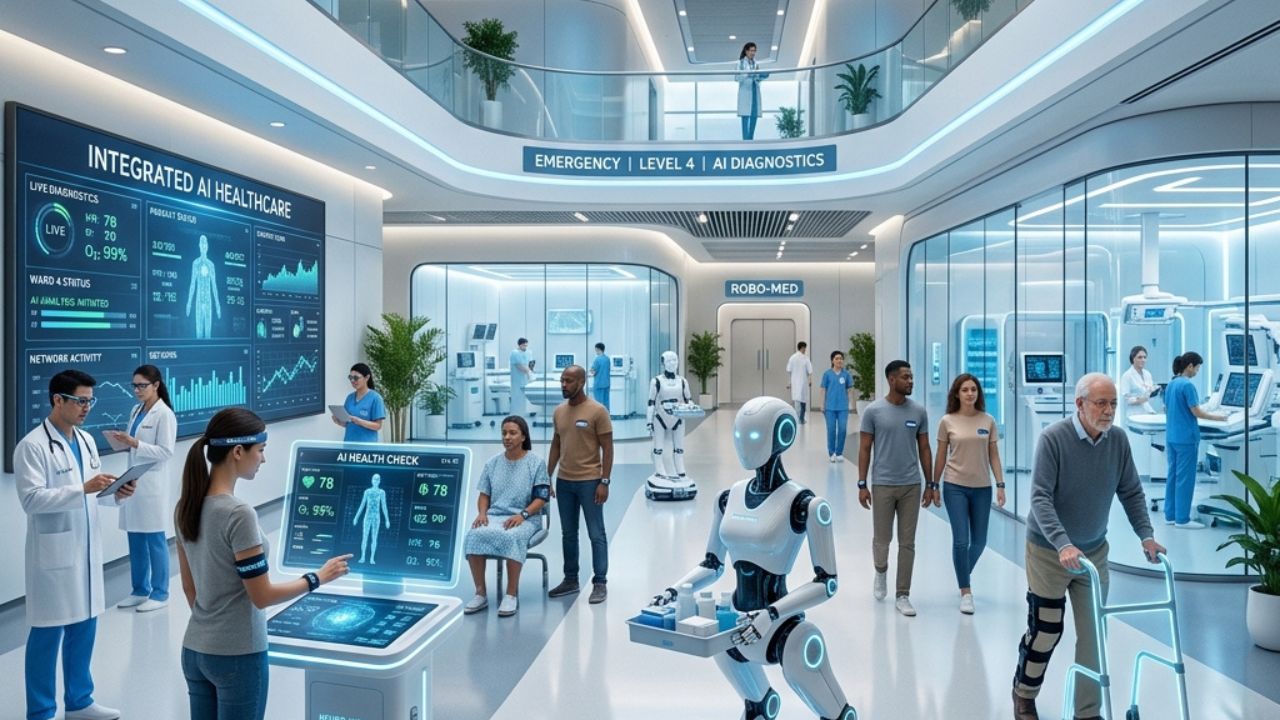
A visit to a hospital in the coming years may look completely different from the healthcare experience people are familiar with today. Traditional hospitals have often depended on manual documentation, separate systems, and treatments that begin after health problems appear. However, the healthcare industry in the United States is undergoing a major transformation. Hospitals are becoming smarter, more connected, and more intelligent through the use of advanced digital technologies, artificial intelligence, automation, and real-time data systems.
These modern healthcare facilities, commonly known as smart hospitals, are designed to create a more efficient and patient-focused environment. By connecting medical devices, digital platforms, healthcare professionals, and patients through advanced technology, smart hospitals aim to improve diagnosis, treatment, communication, and overall hospital operations.
The adoption of digital healthcare solutions in the USA has grown rapidly over the past decade. Electronic health records (EHRs) have become a standard part of medical care. Virtual healthcare appointments are now widely accepted, allowing patients to consult doctors remotely. However, the concept of a smart hospital goes far beyond digital records and online consultations. Today’s hospitals are integrating artificial intelligence systems, smart monitoring devices, predictive analytics, and automated solutions into daily operations.
Artificial intelligence has become one of the most powerful forces driving this healthcare revolution. By processing enormous amounts of medical information in real time, AI helps doctors identify diseases earlier, create personalized treatment plans, improve hospital efficiency, and reduce pressure on healthcare workers. From predicting patient risks to managing hospital resources, AI is changing the way healthcare services are delivered across the United States.
How Artificial Intelligence Powers Smart Hospitals
Artificial intelligence works as the intelligent foundation of smart hospitals. It collects and analyzes information from multiple sources, including medical records, imaging systems, wearable devices, and hospital equipment. This information is transformed into valuable insights that help healthcare professionals make faster and more accurate decisions.
AI-Powered Diagnosis and Personalized Treatment
One of the most significant contributions of artificial intelligence in healthcare is personalized medicine. Instead of using a general treatment approach, doctors can now analyze individual factors such as genetics, medical history, lifestyle, and environmental influences to create more targeted care plans.
AI algorithms can examine complex medical data and help physicians determine which treatments are most likely to work for a particular patient. This reduces dependence on trial-and-error methods and allows healthcare providers to deliver more precise therapies.
Early disease detection is another area where AI is making a major difference. Predictive analytics can identify warning signs of serious conditions before symptoms become severe. For example, AI systems can analyze patient information and alert medical teams about possible risks related to heart problems, infections, or other critical conditions.
Medical imaging has also experienced significant improvements through artificial intelligence. AI-powered systems can examine X-rays, CT scans, and MRI images to identify small abnormalities that may be difficult for the human eye to detect. These technologies assist radiologists in finding tumors, fractures, and other medical issues with greater speed and accuracy.
AI Improving Hospital Management and Daily Operations
Artificial intelligence is not limited to direct patient care. It is also transforming the way hospitals manage their operations behind the scenes.
Smart systems help hospitals improve the use of important resources such as patient beds, operating rooms, medical equipment, and staff schedules. By analyzing previous patterns, seasonal trends, and current healthcare demands, AI can predict future patient volumes and help administrators prepare in advance.
For example, hospitals can use AI forecasting tools to estimate emergency department demand or predict when additional medical staff may be required. This allows healthcare facilities to operate more efficiently and reduce unnecessary delays.
Supply management is another area benefiting from automation. AI-powered inventory systems can monitor supplies in real time and automatically alert staff when important items such as medications, surgical equipment, or protective supplies need replacement.
Artificial intelligence is also helping reduce administrative workloads. Tasks such as medical coding, appointment scheduling, billing processes, and insurance verification can be automated, allowing healthcare workers to spend more time focusing on patients instead of paperwork.
Technologies Creating the Smart Hospital Environment
Although artificial intelligence provides the decision-making ability of smart hospitals, several other technologies work together to create the complete digital healthcare ecosystem.
Internet of Medical Things (IoMT)
The Internet of Medical Things (IoMT) connects medical devices, sensors, and healthcare systems through digital networks. These connected technologies allow hospitals to collect and share important health information instantly.
Wearable healthcare devices can monitor patient conditions remotely by tracking information such as heart rate, blood pressure, glucose levels, and oxygen levels. Doctors can review this data even when patients are outside traditional hospital settings.
Inside smart hospitals, connected sensors are installed on medical equipment, patient beds, and monitoring systems. These devices continuously send updates to healthcare teams, giving doctors and nurses a real-time understanding of patient conditions.
This constant flow of information allows medical professionals to respond quickly when a patient’s health changes and improves overall monitoring accuracy.
Big Data Analytics in Healthcare
Smart hospitals generate enormous amounts of medical information every day. Big data analytics helps healthcare organizations organize, analyze, and understand this information to improve decision-making.
Hospitals can use advanced analytics to identify healthcare trends, improve treatment methods, reduce unnecessary hospital readmissions, and develop better patient care strategies.
However, managing large amounts of healthcare data requires strong security measures. Patient information is highly sensitive, making data protection, privacy regulations, and cybersecurity essential parts of any digital healthcare system.
Hospitals must ensure that advanced analytics platforms follow strict privacy standards while protecting patient information from cyber threats.
Robotics and Automation in Modern Hospitals
Robotics is bringing artificial intelligence and digital innovation into the physical environment of healthcare facilities. These technologies are helping doctors perform complex procedures, improving accuracy, and reducing the workload placed on medical staff.
One of the most recognized examples is robotic-assisted surgery. Advanced surgical robots allow physicians to perform minimally invasive operations with enhanced precision and better control. These systems can provide detailed visualization, smaller surgical movements, and improved accuracy during delicate procedures.
Robotics is also transforming hospital pharmacies. Automated medication dispensing systems help reduce prescription errors by carefully organizing and delivering medicines according to patient requirements. These systems improve safety while allowing pharmacists and healthcare workers to focus on more important clinical responsibilities.
Behind the scenes, robotic process automation (RPA) is improving administrative operations. Repetitive tasks such as updating patient information, processing insurance documents, verifying records, and managing appointment systems can be completed automatically. This allows hospital employees to spend more time providing direct support to patients.
Benefits of Smart Hospitals for Patients and Healthcare Providers
The movement toward smart hospitals offers significant improvements for both patients and healthcare professionals. By combining advanced technology with medical expertise, these facilities create a more efficient, safer, and personalized healthcare experience.
Better Patient Experience and Improved Access to Care
One of the biggest advantages of smart hospitals is the ability to provide patients with easier access to healthcare services. Digital healthcare platforms, virtual consultations, and remote monitoring systems allow patients to connect with medical professionals without always visiting a hospital physically.
Telemedicine has become an important part of modern healthcare by helping patients receive medical advice from their homes. This is especially valuable for people living in rural areas or individuals who have difficulty traveling for regular appointments.
Smart scheduling systems also improve the patient experience by reducing waiting times and helping hospitals manage appointments more effectively. Digital check-in systems, mobile health applications, and online access to medical records allow patients to participate more actively in their healthcare decisions.
Personalized healthcare is another major benefit. By analyzing patient data, smart systems help doctors understand individual health conditions and create treatment plans based on each person’s specific needs.
Greater Efficiency and Reduced Healthcare Costs
Smart technologies allow hospitals to operate more efficiently by reducing waste, improving resource management, and minimizing human errors.
Predictive maintenance systems can monitor important medical equipment such as MRI machines, ventilators, and monitoring devices. These systems identify possible equipment problems before failures occur, helping hospitals avoid unexpected downtime and expensive repairs.
Automated workflows also improve daily hospital operations. When administrative processes become faster and more accurate, healthcare organizations can reduce operational expenses while maintaining quality care.
Better resource management helps hospitals use staff, equipment, and facilities more effectively. This can lead to shorter patient waiting periods, improved workflow, and more affordable healthcare delivery.
Improved Patient Safety and Medical Outcomes
Patient safety is one of the most important goals of smart hospitals. Real-time monitoring systems allow doctors and nurses to detect changes in a patient’s condition quickly and respond before serious complications develop.
AI-based warning systems can identify early signs of health deterioration, allowing medical teams to provide faster interventions. This proactive approach can improve outcomes for patients experiencing critical conditions.
Smart medication systems, digital records, and AI-assisted diagnosis tools also help reduce medical errors. Healthcare professionals have access to accurate patient information, updated medical research, and advanced decision-support tools when making treatment decisions.
By combining technology with human expertise, smart hospitals create a safer environment where patients receive more informed and effective care.
Challenges in Building Smart Hospitals
Although smart hospitals offer many advantages, healthcare organizations face several challenges while adopting these advanced technologies. Transitioning from traditional systems to fully connected digital environments requires significant investment, planning, and adaptation.
Protecting Patient Data and Privacy
Healthcare information is among the most sensitive types of personal data. As hospitals become more digitally connected, protecting patient information from cybersecurity threats becomes increasingly important.
Smart hospitals must follow strict healthcare privacy regulations, including HIPAA requirements, while developing strong security systems to prevent unauthorized access.
Cyberattacks targeting healthcare organizations have increased in recent years, making cybersecurity a top priority. Hospitals must invest in advanced protection systems, regular security testing, and employee training to reduce risks.
Artificial intelligence also creates ethical challenges. Healthcare organizations must ensure that AI systems are developed responsibly and do not create unfair treatment decisions because of incomplete or biased data.
Maintaining patient trust requires transparency about how medical information is collected, stored, and used by digital healthcare technologies.
Integration and Compatibility Challenges
Many hospitals still rely on older healthcare software systems that were not designed to communicate with modern digital platforms. This creates challenges when organizations attempt to connect new technologies with existing infrastructure.
For a smart hospital to function effectively, different systems must work together smoothly. Medical devices, electronic health records, AI platforms, and communication tools need standardized methods for exchanging information.
Without proper integration, healthcare data can become separated into different systems, preventing doctors from accessing a complete view of a patient’s medical history.
Creating universal standards for healthcare technology communication is essential for building truly connected hospitals.
Training Healthcare Workers for Digital Transformation
Technology alone cannot improve healthcare unless medical professionals know how to use it effectively. Doctors, nurses, and hospital employees need proper training to understand new digital tools and incorporate them into their daily responsibilities.
Learning to work with AI systems, automated equipment, and digital platforms requires time and investment. Hospitals must provide ongoing education programs to ensure staff members feel confident using advanced technologies.
There are also concerns that automation may replace certain healthcare jobs. However, most experts believe AI will primarily support healthcare workers by reducing repetitive tasks and allowing them to focus more on patient care.
The future of healthcare will likely involve collaboration between human professionals and intelligent technology rather than replacing human expertise.
Regulatory and Financial Challenges
Healthcare is one of the most regulated industries in the world, and smart hospitals must operate within strict legal frameworks. Governments and healthcare organizations continue working to create appropriate rules for artificial intelligence, automated decision-making, and digital patient monitoring.
Developing smart hospital infrastructure also requires significant financial investment. Advanced equipment, cybersecurity systems, AI platforms, and employee training programs can be expensive.
Large medical institutions may have the resources to adopt these technologies quickly, but smaller hospitals, especially rural healthcare facilities, may struggle with the cost of digital transformation.
Finding ways to make smart healthcare technology accessible across different communities will be an important challenge in the coming years.
Examples of Smart Hospitals Leading Digital Healthcare in the USA
Several major healthcare institutions in the United States are already demonstrating how artificial intelligence and digital technologies can transform patient care. These hospitals are investing heavily in automation, predictive analytics, advanced medical research, and connected healthcare systems to create more efficient and patient-focused environments.
Mayo Clinic: Advancing AI-Based Healthcare Solutions
Mayo Clinic has become one of the leading examples of digital healthcare innovation in the United States. The organization has invested significantly in artificial intelligence, data analytics, and advanced diagnostic technologies to improve medical decision-making.
Mayo Clinic uses AI systems to analyze large amounts of medical information, helping physicians identify health risks earlier and create more accurate treatment strategies. These technologies support areas such as cardiovascular care, cancer detection, imaging analysis, and personalized medicine.
The hospital also focuses on combining digital tools with human expertise. Instead of replacing doctors, AI works as a support system that provides valuable insights and helps healthcare professionals make better-informed decisions.
Through partnerships with technology companies and research organizations, Mayo Clinic continues developing new methods to improve diagnosis accuracy, patient monitoring, and treatment outcomes.
Cleveland Clinic: Expanding Remote Patient Monitoring
Cleveland Clinic has embraced smart healthcare through advanced telemedicine programs and digital monitoring systems. The organization uses technology to connect specialists with patients across different locations.
One major innovation is the use of remote monitoring platforms that allow healthcare teams to track patients outside traditional hospital settings. These systems collect important health information, such as heart rate, blood pressure, and other vital signs, allowing doctors to identify potential problems before they become emergencies.
Cleveland Clinic also uses digital command centers that help medical teams coordinate care more effectively. By analyzing real-time information, these systems improve hospital operations, manage patient flow, and help staff respond quickly to changing conditions.
This technology-driven approach allows Cleveland Clinic to provide high-quality care while improving efficiency across its healthcare network.
Johns Hopkins Hospital: Using AI for Hospital Management
Johns Hopkins Hospital is another institution leading the smart hospital movement. The hospital developed advanced digital systems designed to improve operational efficiency and patient care coordination.
Its capacity command center uses predictive analytics to manage hospital resources. The system helps administrators monitor bed availability, coordinate patient transfers, organize transportation services, and improve operating room scheduling.
By using artificial intelligence to analyze hospital activity, Johns Hopkins can identify potential delays and make faster decisions. This improves patient movement throughout the facility and reduces unnecessary waiting periods.
The hospital’s digital transformation demonstrates how AI can improve not only medical treatment but also the overall management of healthcare facilities.
The Future Development of Smart Hospitals in America
The evolution of smart hospitals is expected to accelerate as technology continues improving. Future healthcare facilities will likely become even more connected, automated, and focused on preventing illness before it becomes serious.
Digital Twins in Healthcare Management
One emerging technology that may transform hospital operations is the use of digital twins. A digital twin is a virtual model of a hospital, patient, or healthcare process that allows organizations to test different strategies before applying them in real life.
Hospitals could use digital twins to simulate patient movement, emergency responses, staffing requirements, and resource management. This allows administrators to identify problems and improve systems without affecting actual patient care.
For example, before expanding an emergency department, hospital leaders could use a digital simulation to understand how the changes would impact waiting times, staffing needs, and patient experience.
This technology could help hospitals become more efficient while reducing operational risks.
Artificial Intelligence Becoming More Predictive
The next generation of AI healthcare systems will focus increasingly on prediction and prevention. Instead of only responding after patients become sick, smart hospitals will use data to identify health risks earlier.
Wearable devices, electronic health records, genetic information, and lifestyle data will work together to create detailed health profiles. AI systems will analyze this information and alert healthcare providers when intervention may be needed.
For example, an AI system could detect early warning signs of heart problems or diabetes and recommend preventive actions before serious complications occur.
This shift from reactive treatment to proactive healthcare could significantly improve public health outcomes.
Growth of Remote and Virtual Healthcare
Virtual healthcare will continue expanding as smart hospitals develop stronger digital networks. Remote consultations, online monitoring, and virtual specialists will become common parts of healthcare delivery.
Patients may receive continuous health monitoring through wearable devices connected directly to their healthcare providers. Doctors will be able to review patient information remotely and provide guidance without requiring frequent hospital visits.
This approach will be especially beneficial for individuals living in remote communities where access to specialized medical care is limited.
Telehealth combined with AI technology could help reduce healthcare inequalities by bringing advanced medical support to more people.
Augmented Reality and Advanced Medical Training
Augmented reality (AR) and virtual reality (VR) technologies are expected to play a larger role in future hospitals. These tools can improve medical education, surgical training, and patient care.
Medical students and surgeons can use realistic virtual environments to practice complex procedures without risk to real patients. Experienced specialists may also use AR technology during operations to receive additional visual information and guidance.
For patients, these technologies could improve understanding of medical procedures by providing interactive explanations of their conditions and treatment options.
Building a More Connected Healthcare Future
The future of smart hospitals depends on creating a healthcare system where technology and human expertise work together. Digital tools, artificial intelligence, and connected devices can improve efficiency, but compassionate medical care will always remain essential.
Hospitals must focus on developing technology that supports doctors, nurses, and patients rather than creating unnecessary complexity. Successful digital transformation requires careful planning, strong security measures, and continuous improvement.
Healthcare organizations will need to collaborate with technology companies, government agencies, and medical professionals to create reliable and accessible digital healthcare systems.
Creating a Patient-Focused Digital Healthcare System
The true purpose of smart hospitals is not simply to introduce advanced technology but to create a healthcare system that places patients at the center of every decision. While artificial intelligence, automation, and digital platforms provide powerful capabilities, their greatest value comes from improving the human experience of healthcare.
Future smart hospitals will focus on making healthcare more accessible, personalized, and convenient. Patients will have greater control over their medical information, easier communication with healthcare providers, and faster access to treatments that match their individual needs.
Digital healthcare tools will allow patients to become more involved in managing their own health. Mobile applications, wearable devices, and online health platforms will provide real-time information about personal health conditions, medication schedules, and preventive care recommendations.
This increased involvement can encourage healthier lifestyles and help patients make better decisions about their long-term well-being.
Improving Healthcare Accessibility Through Technology
One of the most important benefits of smart hospitals is the potential to improve healthcare access for underserved communities. In the past, patients living in rural areas often faced difficulties reaching specialized medical facilities. Digital healthcare is changing this situation.
Telemedicine platforms allow patients to connect with specialists from anywhere, reducing the need for long-distance travel. Remote monitoring systems enable doctors to supervise chronic conditions without requiring frequent hospital visits.
Artificial intelligence can also help healthcare providers identify communities that need additional medical support. By analyzing population health data, hospitals can better understand disease patterns and create targeted healthcare programs.
This technology-driven approach can help reduce healthcare gaps and ensure that more people receive timely and effective medical attention.
The Importance of Cybersecurity in Future Hospitals
As hospitals become increasingly digital, cybersecurity will become one of the most important areas of healthcare management. Smart hospitals depend on large amounts of sensitive patient information, making strong security systems essential.
Healthcare organizations must continuously improve their cybersecurity strategies to protect electronic health records, connected medical devices, and communication networks.
Future hospitals will likely use advanced security technologies such as artificial intelligence-powered threat detection, automated monitoring systems, and stronger encryption methods to protect patient information.
Employee education will also remain critical. Hospital staff must understand cybersecurity risks and follow proper procedures to prevent accidental data breaches.
Maintaining patient trust will depend heavily on how effectively hospitals protect personal health information in a highly connected digital environment.
Balancing Technology With Human Care
Although technology is transforming healthcare, the role of doctors, nurses, and other medical professionals remains irreplaceable. Smart hospitals are not designed to remove human involvement but to enhance the abilities of healthcare workers.
Artificial intelligence can analyze information quickly, identify patterns, and provide recommendations, but human professionals provide empathy, judgment, and emotional support that technology cannot replicate.
The most successful smart hospitals will be those that create a balance between advanced digital systems and compassionate medical care.
Healthcare providers will continue making important decisions while technology assists them with accurate information, faster analysis, and improved communication.
This partnership between humans and machines represents the future direction of modern medicine.
Preparing for the Next Generation of Healthcare
The transformation toward smart hospitals represents one of the biggest changes in the history of healthcare. Artificial intelligence, connected devices, robotics, and digital platforms are creating new possibilities for improving patient outcomes and hospital efficiency.
However, successful implementation requires more than purchasing advanced technology. Hospitals must develop strong strategies for training employees, protecting patient data, integrating systems, and ensuring equal access to digital healthcare services.
Healthcare leaders must carefully evaluate new technologies and focus on solutions that provide real benefits for patients and medical professionals.
Investment in digital infrastructure, cybersecurity, and workforce education will determine how successfully hospitals adapt to this new era.
Final Thoughts: A Smarter Future for American Healthcare
Smart hospitals are redefining how healthcare is delivered across the United States. Through artificial intelligence, automation, remote monitoring, and advanced data analysis, hospitals are moving from traditional reactive care toward a more predictive and personalized model.
These innovations have the potential to detect diseases earlier, improve treatment accuracy, reduce medical errors, and make healthcare services more accessible.
At the same time, challenges such as cybersecurity risks, high implementation costs, regulatory requirements, and workforce adaptation must be carefully managed.
The future of healthcare will not depend on technology alone. It will require collaboration between healthcare professionals, technology developers, policymakers, and patients to create a system that is secure, efficient, and focused on human needs.
As smart hospital technology continues to evolve, the vision of a connected healthcare ecosystem is becoming a reality. Patients will benefit from faster diagnoses, personalized treatments, and continuous health monitoring, while healthcare professionals will have better tools to provide exceptional care.
The next generation of hospitals will not simply treat illnesses after they appear. They will predict health risks, prevent complications, and create a more proactive approach to medicine.
The era of smart hospitals has already begun, and the combination of artificial intelligence and digital healthcare will continue shaping the future of medical care in the United States.