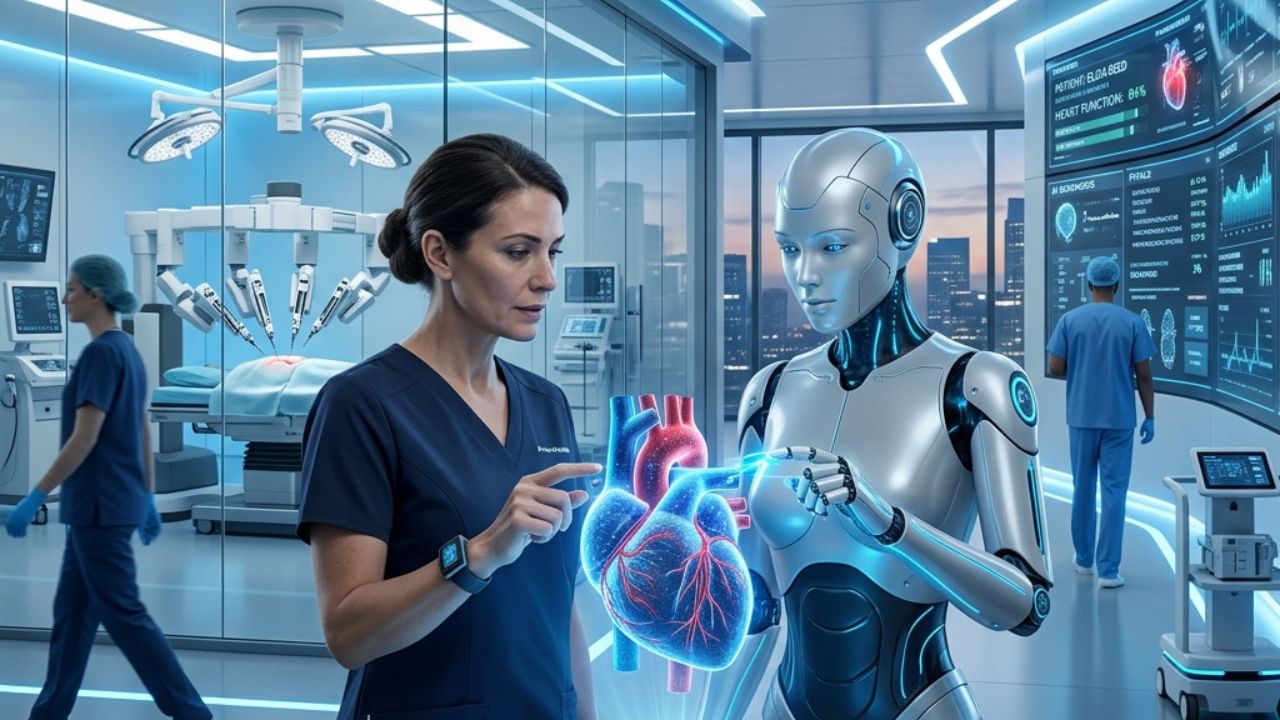
Artificial intelligence is rapidly changing the way healthcare is delivered, making medical services faster, more accurate, and increasingly personalized. From identifying diseases earlier to accelerating drug research and simplifying hospital operations, AI is becoming an essential tool for healthcare providers worldwide. Technologies powered by machine learning, advanced data analysis, and intelligent automation are helping physicians make better decisions while reducing the administrative workload that often limits patient care.
Healthcare has traditionally relied on the knowledge and experience of medical professionals supported by laboratory testing, imaging, and patient history. Although these methods remain fundamental, today’s healthcare systems generate enormous amounts of digital information that would be impossible for humans alone to analyze efficiently. Artificial intelligence bridges that gap by processing millions of data points within seconds, uncovering patterns that can support earlier diagnoses and more informed treatment decisions.
Rather than replacing doctors, AI is designed to strengthen their capabilities. Physicians continue to make the final clinical decisions, while intelligent systems provide valuable insights drawn from medical records, imaging scans, laboratory results, and scientific research. This collaboration enables healthcare professionals to spend less time on repetitive administrative tasks and more time focusing on patient care.
As artificial intelligence continues to evolve, its influence extends well beyond hospitals and research laboratories. AI is transforming diagnostics, supporting personalized treatments, improving patient monitoring, streamlining healthcare administration, and helping medical researchers develop new therapies faster than ever before. Understanding how these technologies are being used today provides valuable insight into the future of modern medicine.
Why Artificial Intelligence Is Becoming Essential in Healthcare
Although artificial intelligence feels like a recent breakthrough, healthcare organizations have explored computer-assisted medical decision-making for decades. Early systems appeared during the 1970s, but limited computing power and the lack of digital medical records prevented widespread adoption.
Today’s healthcare environment is dramatically different.
Electronic Health Records (EHRs), wearable fitness devices, connected medical equipment, genomic sequencing, and advanced diagnostic imaging produce enormous volumes of healthcare data every day. Modern AI systems can quickly analyze this information, recognize meaningful trends, and provide recommendations that would take humans significantly longer to uncover.
Several major factors have accelerated AI adoption across healthcare, including:
- Widespread availability of digital patient records
- Advances in machine learning and deep learning
- Faster cloud computing and data processing
- Improved medical imaging technologies
- Growing demand for personalized healthcare
Together, these developments allow AI to assist clinicians with everything from disease detection to treatment planning.
At the same time, responsible implementation remains essential.
Artificial intelligence should support—not replace—medical professionals. Doctors must continue to exercise clinical judgment while using AI recommendations as an additional source of information. Healthcare organizations also have a responsibility to minimize bias within AI models, protect patient privacy, and ensure that automated recommendations remain transparent and explainable.
Improving Medical Diagnosis With Artificial Intelligence
One of AI’s greatest strengths lies in recognizing complex patterns hidden within massive datasets.
Because accurate diagnosis forms the foundation of effective treatment, healthcare providers increasingly use AI to assist in detecting diseases earlier and with greater precision.
Smarter Medical Imaging Analysis
Medical imaging is one of the areas where artificial intelligence has produced some of its most significant advances.
Deep learning algorithms can rapidly examine imaging studies such as:
- X-rays
- CT scans
- MRI scans
- Mammograms
- Ultrasound images
These systems identify subtle abnormalities that may be difficult to detect during manual review.
For example, AI-assisted imaging is helping radiologists detect early-stage cancers by identifying tiny tissue changes before they become obvious through conventional examination. Similar technology is improving the detection of fractures, neurological disorders, cardiovascular disease, and lung conditions.
Artificial intelligence also plays an important role in diabetic retinopathy screening, allowing ophthalmologists to identify vision-threatening eye damage earlier and begin treatment before permanent vision loss occurs.
More Accurate Pathology and Tissue Analysis
Pathologists diagnose many diseases by examining tissue samples under a microscope.
Artificial intelligence now enhances this process by analyzing high-resolution digital pathology slides using advanced computer vision technology.
AI systems can:
- Detect abnormal cell patterns
- Identify cancer biomarkers
- Measure tumor characteristics
- Assist with disease classification
- Improve consistency between pathology reports
These capabilities help physicians develop more accurate diagnoses and select treatments that better match each patient’s condition.
Personalized Diagnostic Insights
Every patient has a unique combination of genetics, medical history, lifestyle, and environmental factors.
Artificial intelligence brings these pieces together to support more individualized medical evaluations.
Instead of relying solely on symptoms, AI systems analyze genetic information alongside laboratory results, family history, medications, and health records to estimate disease risk and recommend earlier interventions.
For example, predictive AI models can estimate a person’s likelihood of developing chronic conditions such as diabetes, heart disease, or certain cancers years before symptoms appear. Early identification allows physicians to recommend preventive measures that may significantly improve long-term health outcomes.
How AI Is Transforming Medical Treatments
Artificial intelligence continues supporting patient care even after a diagnosis has been made.
By analyzing large volumes of clinical data, AI helps healthcare providers identify treatment options that may produce better outcomes while reducing unnecessary risks.
Accelerating Drug Discovery
Developing a new medication has traditionally been a lengthy and expensive process that can take more than a decade.
Artificial intelligence is helping pharmaceutical researchers shorten that timeline considerably.
Machine learning models can rapidly evaluate millions of chemical compounds, predict how they may interact with specific biological targets, and identify promising drug candidates much earlier in the research process.
AI is also making drug repurposing more efficient.
Instead of developing entirely new medications, researchers can analyze existing approved drugs to determine whether they may successfully treat additional diseases, reducing both development costs and approval timelines.
Supporting Precision Medicine
Modern healthcare increasingly recognizes that treatments should be tailored to each individual rather than applying identical therapies to every patient.
Artificial intelligence makes precision medicine far more practical.
By evaluating information such as:
- Genetic profiles
- Medical history
- Laboratory findings
- Lifestyle factors
- Current medications
AI systems help physicians develop personalized treatment plans designed to maximize effectiveness while minimizing unwanted side effects.
Cancer treatment provides one of the strongest examples.
Oncology specialists now use AI-assisted tools to evaluate tumor characteristics, recommend targeted therapies, estimate treatment responses, and optimize chemotherapy strategies for individual patients.
Improving Robotic-Assisted Surgery
Artificial intelligence also plays an important role inside the operating room.
Modern robotic surgical systems enhance a surgeon’s precision by stabilizing movements, improving visualization, and assisting during delicate procedures.
These technologies often support minimally invasive surgery, allowing physicians to perform operations through much smaller incisions than traditional surgical methods.
Potential benefits include:
- Greater surgical precision
- Reduced blood loss
- Smaller incisions
- Lower risk of complications
- Faster patient recovery
AI-powered simulation platforms are also becoming valuable educational tools, allowing surgeons and medical students to practice complex procedures in realistic virtual environments before operating on actual patients.
Enhancing Patient Care Through Artificial Intelligence
Artificial intelligence is making healthcare more proactive by helping providers monitor patients continuously, identify potential health risks earlier, and improve communication between patients and medical teams. These technologies extend care beyond hospitals and clinics, allowing healthcare professionals to deliver support wherever patients are.
Predicting Patient Deterioration Before It Happens
One of the most valuable applications of AI in hospitals is its ability to recognize early warning signs of serious medical complications.
Instead of relying only on periodic patient assessments, AI systems continuously evaluate information such as:
- Heart rate
- Blood pressure
- Respiratory rate
- Oxygen saturation
- Laboratory test results
By analyzing these data points together, AI can detect subtle changes that may indicate a patient’s condition is worsening.
For example, intelligent monitoring systems can identify early indicators of conditions such as sepsis, respiratory failure, or cardiac arrest several hours before symptoms become obvious during routine clinical observation.
Receiving these early alerts allows doctors and nurses to begin treatment sooner, improving patient outcomes while reducing the likelihood of medical emergencies.
AI-Powered Virtual Assistants and Healthcare Chatbots
Artificial intelligence is also improving communication between healthcare providers and patients.
AI-powered chatbots and virtual assistants now handle many routine tasks that previously required staff involvement.
These systems commonly help patients:
- Schedule appointments
- Receive medication reminders
- Access basic health information
- Review post-treatment instructions
- Find appropriate healthcare services
Many hospitals also use conversational AI to answer frequently asked questions, reducing call center workloads and improving response times.
In mental healthcare, AI chatbots are providing additional support by offering wellness resources, symptom check-ins, and guided coping exercises while patients wait for appointments with licensed professionals.
Although these systems cannot replace qualified therapists, they provide accessible support that complements traditional mental health services.
Remote Patient Monitoring With Wearable Technology
Wearable health devices have become increasingly common, allowing individuals to monitor their health throughout the day.
Smartwatches, fitness trackers, glucose monitors, and connected medical devices continuously collect information including:
- Heart rate
- Blood oxygen levels
- Physical activity
- Sleep quality
- Blood glucose readings
Artificial intelligence analyzes this continuous stream of information to identify unusual health patterns that may require medical attention.
For example, if a wearable device detects an irregular heartbeat or consistently elevated blood pressure, AI can notify healthcare providers, enabling earlier evaluation before symptoms worsen.
Remote monitoring has become particularly valuable for patients managing chronic conditions such as diabetes, hypertension, asthma, and heart disease because it supports ongoing care without requiring frequent hospital visits.
Improving Hospital Operations With Artificial Intelligence
While patient care receives much of the attention, artificial intelligence is also transforming how hospitals and healthcare organizations operate behind the scenes.
Administrative efficiency directly affects patient care by reducing delays, lowering operational costs, and allowing healthcare professionals to spend more time treating patients instead of completing paperwork.
Optimizing Clinical Workflows
Hospitals manage thousands of moving parts every day.
Artificial intelligence helps administrators improve efficiency by analyzing operational data and making smarter resource allocation decisions.
AI systems assist with:
- Predicting patient admissions
- Scheduling medical staff
- Managing hospital bed availability
- Coordinating operating rooms
- Reducing appointment delays
By forecasting demand more accurately, hospitals can better prepare staffing levels and improve patient flow throughout the facility.
Natural language processing (NLP) also automates many documentation tasks by converting physician conversations into structured medical records, reducing the administrative burden associated with Electronic Health Records (EHRs).
As a result, clinicians spend less time entering data and more time interacting directly with patients.
Strengthening Cybersecurity and Fraud Detection
Healthcare organizations store enormous amounts of highly sensitive patient information, making them frequent targets for cybercriminals.
Artificial intelligence has become an important defense against these threats.
AI-powered cybersecurity systems monitor hospital networks around the clock, identifying unusual activity that may indicate malware, unauthorized access, or attempted data breaches.
Unlike traditional security software, AI continuously learns from network behavior, allowing it to detect emerging threats more quickly.
Insurance companies also rely on AI to reduce healthcare fraud.
Machine learning algorithms examine millions of insurance claims to identify unusual billing patterns, duplicate claims, and suspicious reimbursement requests that could indicate fraudulent activity.
By identifying these irregularities early, insurers help reduce unnecessary healthcare costs while protecting both providers and patients.
Challenges Facing Artificial Intelligence in Healthcare
Despite its enormous potential, artificial intelligence still faces several obstacles before achieving widespread adoption across every area of healthcare.
Successfully integrating AI requires addressing technological, ethical, regulatory, and operational challenges.
Protecting Patient Privacy
AI systems require large amounts of healthcare data to learn and improve.
Because this information often contains highly sensitive personal details, protecting patient privacy remains one of the industry’s highest priorities.
Healthcare organizations must comply with strict regulations governing:
- Patient consent
- Data storage
- Information sharing
- Security standards
- Confidentiality requirements
Ensuring that patient information remains protected while allowing AI systems to learn effectively continues to be a major focus for healthcare providers and technology companies alike.
Ensuring AI Is Fair and Transparent
Artificial intelligence is only as reliable as the data used to train it.
If training datasets fail to represent diverse patient populations, AI models may produce less accurate recommendations for certain demographic groups.
Researchers are therefore working to reduce algorithmic bias while improving transparency.
Explainable AI (XAI) is becoming increasingly important because it allows clinicians to understand how an AI system reached a particular recommendation rather than simply accepting an unexplained result.
Greater transparency helps physicians maintain confidence in AI-assisted decision-making while supporting better patient care.
Integrating AI Into Existing Healthcare Systems
Many hospitals still operate with older digital infrastructure that wasn’t designed to support modern AI technologies.
Connecting intelligent software with existing Electronic Health Record systems, imaging platforms, laboratory databases, and hospital management software often requires substantial technical work.
Successful implementation also depends on staff training.
Doctors, nurses, and administrators must understand both the strengths and limitations of AI tools to use them effectively in everyday clinical practice.
Healthcare organizations increasingly recognize that technology alone isn’t enough—education and workflow adaptation are equally important.
The Future of Artificial Intelligence in Healthcare
Artificial intelligence continues advancing rapidly, and its role in medicine is expected to expand significantly over the coming years.
Several emerging technologies are shaping the next generation of healthcare innovation.
Future developments are likely to include:
- More explainable and transparent AI systems
- Faster and more personalized treatment recommendations
- Expanded remote patient monitoring
- Greater use of predictive healthcare analytics
- Improved collaboration between healthcare institutions through privacy-preserving technologies such as federated learning
Rather than replacing healthcare professionals, these advancements are expected to strengthen collaboration between clinicians and intelligent technologies, creating more efficient, accurate, and patient-centered healthcare systems.
Embracing the Future of AI-Driven Healthcare
Artificial intelligence is no longer a futuristic concept—it’s already transforming the way healthcare is delivered across hospitals, clinics, research centers, and even patients’ homes. From helping doctors identify diseases earlier to supporting personalized treatment plans and improving hospital efficiency, AI is becoming an indispensable part of modern medicine.
As healthcare systems continue generating larger volumes of medical data, AI’s ability to analyze information quickly and accurately will become even more valuable. Physicians will have access to better decision-support tools, researchers will accelerate the development of new therapies, and healthcare organizations will be able to provide more efficient, patient-centered services.
That said, successful AI adoption requires more than advanced technology. Healthcare providers must prioritize patient privacy, maintain transparency in AI-assisted decisions, and ensure that medical professionals remain at the center of every clinical judgment. Artificial intelligence should continue serving as a powerful assistant rather than replacing the expertise, compassion, and critical thinking that healthcare professionals bring to patient care.
Organizations planning to adopt AI can begin by identifying repetitive administrative tasks, evaluating areas where diagnostic support could improve outcomes, and investing in staff education alongside new technologies. Starting with targeted pilot programs allows healthcare teams to measure results before expanding AI across larger clinical operations.
As AI capabilities continue evolving, collaboration between healthcare professionals, researchers, technology companies, and regulators will play a crucial role in shaping a future where intelligent systems improve healthcare quality while maintaining safety, fairness, and patient trust.
Frequently Asked Questions (FAQs)
What is artificial intelligence in healthcare?
Artificial intelligence in healthcare refers to the use of computer systems that can analyze medical data, recognize patterns, and assist healthcare professionals with tasks such as diagnosing diseases, recommending treatments, monitoring patients, and improving hospital operations. AI supports medical decision-making but does not replace qualified healthcare providers.
How is AI improving disease diagnosis?
AI analyzes medical images, laboratory results, electronic health records, and patient histories to identify patterns that may indicate disease. It can help detect conditions such as cancer, heart disease, diabetic retinopathy, and neurological disorders earlier, allowing doctors to begin treatment sooner and improve patient outcomes.
Can artificial intelligence replace doctors?
No. AI is designed to assist healthcare professionals rather than replace them. While AI can process large amounts of information and provide recommendations, physicians remain responsible for evaluating patients, making diagnoses, developing treatment plans, and considering factors that technology alone cannot fully understand.
What are the biggest benefits of AI in healthcare?
Artificial intelligence offers several important advantages, including:
- Earlier and more accurate disease detection
- Personalized treatment recommendations
- Faster drug discovery and development
- Improved patient monitoring
- Reduced administrative workload
- Better hospital resource management
- Enhanced cybersecurity and fraud detection
Together, these improvements help healthcare organizations deliver higher-quality care more efficiently.
Is patient data safe when AI is used?
Healthcare organizations must follow strict privacy and security regulations when using AI systems. Patient information is typically protected through encryption, secure storage, access controls, and compliance with healthcare privacy laws. Maintaining confidentiality remains one of the highest priorities during AI implementation.
How does AI support personalized medicine?
AI combines information from genetic testing, medical history, lifestyle factors, laboratory results, and diagnostic imaging to help physicians recommend treatments tailored to each individual. This personalized approach can improve treatment effectiveness while reducing unwanted side effects.
What role does AI play in medical research?
Artificial intelligence accelerates medical research by analyzing large biological datasets, identifying potential drug candidates, predicting treatment responses, and helping researchers discover new therapies more efficiently. It also supports clinical trial design by identifying suitable participants and analyzing research data more quickly.
Are AI-powered surgical robots completely autonomous?
No. Robotic surgical systems remain under the control of trained surgeons throughout every procedure. AI assists by enhancing precision, improving visualization, and stabilizing surgical instruments, but human surgeons continue making all critical decisions during the operation.
What challenges still limit AI adoption in healthcare?
Despite rapid progress, several challenges remain, including:
- Protecting patient privacy and sensitive medical data
- Reducing bias in AI algorithms
- Meeting regulatory requirements
- Integrating AI with older healthcare systems
- Training healthcare professionals to use AI effectively
- Building trust in AI-assisted clinical decisions
Addressing these issues is essential for responsible and widespread AI adoption.
What does the future of AI in healthcare look like?
Artificial intelligence is expected to become even more integrated into everyday healthcare. Future developments may include more advanced predictive diagnostics, highly personalized treatment planning, expanded remote patient monitoring, explainable AI systems, faster drug discovery, and stronger collaboration between healthcare providers through secure data-sharing technologies. As these innovations continue to evolve, AI is likely to play an increasingly important role in delivering safer, more efficient, and more personalized healthcare.