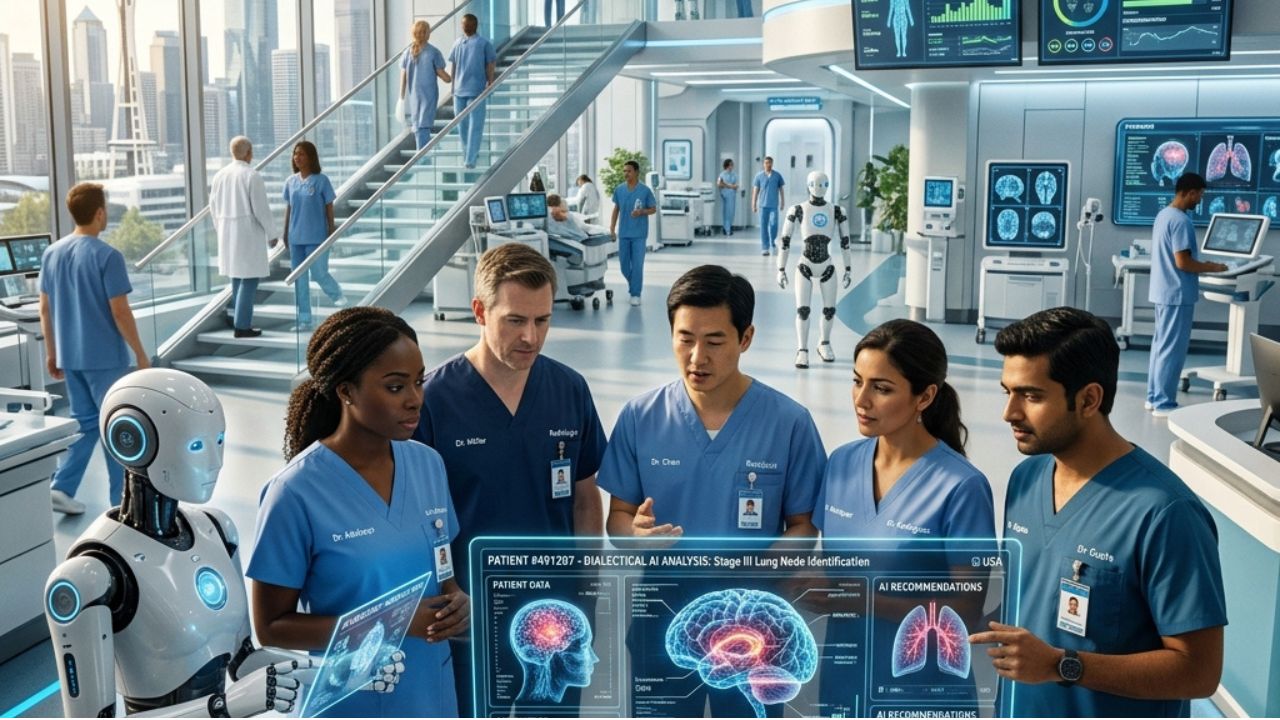
Artificial intelligence is no longer a futuristic concept in healthcare—it’s becoming an essential part of how many hospitals operate every day. Across the United States, healthcare organizations are using AI to improve efficiency, support clinical decision-making, reduce administrative workloads, and deliver more personalized patient care.
As hospitals continue to face rising costs, workforce shortages, and increasing patient demands, AI is helping healthcare professionals work smarter rather than harder. Instead of replacing doctors and nurses, these technologies assist them by analyzing large amounts of medical data, identifying patterns that may otherwise go unnoticed, and automating repetitive tasks that consume valuable time.
From scheduling appointments and managing patient records to assisting with medical imaging and predicting disease risks, AI is transforming nearly every aspect of hospital operations. Healthcare leaders increasingly view these technologies as practical solutions that can improve patient outcomes while making hospitals more efficient and sustainable.
In this guide, we’ll explore why artificial intelligence has become such an important part of modern healthcare, the challenges it’s helping hospitals overcome, and the ways AI is changing both clinical care and hospital management.
Why Are Hospitals Turning to Artificial Intelligence?
Hospitals today operate in an increasingly demanding environment. Growing patient populations, limited healthcare staff, rising operational expenses, and expanding volumes of medical data have created challenges that traditional systems often struggle to manage efficiently.
Artificial intelligence provides new ways to address these issues by supporting faster decision-making, improving workflow efficiency, and helping healthcare providers focus more on patient care instead of administrative responsibilities.
Rather than replacing human expertise, AI serves as an intelligent assistant that processes information quickly and provides valuable insights to clinicians and hospital administrators.
The Biggest Challenges Facing Modern Hospitals
Before understanding AI’s impact, it’s important to recognize the problems hospitals are trying to solve.
Healthcare Workforce Shortages
One of the greatest challenges facing American hospitals is the growing shortage of healthcare professionals. Many organizations continue to struggle with recruiting physicians, nurses, and experienced clinical staff while existing employees face increasing workloads and burnout.
As patient numbers continue to grow, hospitals must find ways to maintain high-quality care without placing additional pressure on already overworked healthcare teams.
Artificial intelligence helps reduce this burden by automating routine administrative work, allowing medical professionals to spend more time caring for patients rather than completing paperwork.
Rising Operating Costs
Providing healthcare has become significantly more expensive over the past decade.
Hospitals must manage staffing expenses, medical equipment, insurance requirements, technology investments, and complex administrative processes while continuing to deliver safe and effective patient care.
Administrative tasks such as medical coding, billing, appointment scheduling, insurance verification, and documentation consume substantial financial and human resources. AI-powered automation helps simplify many of these processes, reducing unnecessary costs while improving overall efficiency.
Managing Massive Amounts of Medical Data
Every hospital generates enormous amounts of information each day.
Electronic health records, laboratory reports, medical imaging, prescription histories, physician notes, insurance claims, and monitoring devices all contribute to a growing pool of healthcare data.
Although this information is incredibly valuable, it can be difficult for healthcare professionals to review and analyze quickly.
Artificial intelligence excels at processing large datasets in seconds, helping clinicians identify important trends, highlight potential risks, and organize patient information more effectively.
Improving Diagnostic Accuracy
Even highly experienced physicians face difficult diagnostic decisions every day.
Medical conditions often present similar symptoms, while patients with multiple health problems require careful evaluation before an accurate diagnosis can be made.
AI-powered clinical support systems analyze medical images, laboratory findings, patient histories, and research data to assist physicians in making more informed decisions. These tools help reduce the possibility of missed findings while providing an additional layer of confidence during complex cases.
How Artificial Intelligence Is Improving Hospital Operations
While many people associate AI with advanced medical technology, some of its greatest benefits are happening behind the scenes.
Hospital administrators are increasingly using artificial intelligence to improve efficiency across everyday operations.
Reducing Administrative Work
Administrative responsibilities consume a significant portion of a healthcare professional’s day.
Tasks such as documenting patient visits, scheduling appointments, processing insurance claims, generating billing codes, and maintaining medical records require countless hours of manual work.
Modern AI software can automatically organize clinical documentation, convert physician conversations into structured medical notes, assist with coding, and streamline billing processes.
By reducing paperwork, healthcare providers gain more time to interact directly with patients while hospitals improve operational efficiency.
Smarter Appointment Scheduling
Scheduling patients is far more complex than simply filling available appointment slots.
Hospitals must consider physician availability, treatment duration, patient urgency, cancellations, and historical attendance patterns.
AI-powered scheduling systems analyze these factors automatically, helping hospitals reduce missed appointments, shorten waiting times, and make better use of available resources.
Patients benefit from faster scheduling while hospitals improve overall productivity.
Better Patient Flow Throughout the Hospital
Managing patient movement from admission through discharge is another major operational challenge.
When emergency departments become overcrowded or inpatient beds remain unavailable, delays quickly affect the entire hospital.
Artificial intelligence helps predict patient admissions, expected discharge times, and bed availability using historical trends and real-time hospital data.
This allows hospital administrators to allocate staff, equipment, and beds more efficiently, reducing bottlenecks and improving patient flow throughout the facility.
Smarter Supply Chain Management
Hospitals rely on thousands of medical supplies every day—from medications and surgical equipment to protective gear and laboratory materials.
Running out of essential supplies can delay treatment, while overstocking increases unnecessary costs.
AI forecasting systems analyze patient demand, seasonal illness patterns, and historical purchasing data to help hospitals maintain the right inventory levels.
This improves resource planning while reducing waste and ensuring critical supplies remain available when patients need them most.
In the next part, we’ll explore how artificial intelligence is transforming clinical care through advanced diagnostics, personalized treatment planning, predictive analytics, patient engagement, and what the future of AI in American hospitals looks like.
How AI Is Transforming Clinical Care
Artificial intelligence is making some of its biggest contributions inside the clinical setting, where speed and accuracy can directly influence patient outcomes. Rather than replacing healthcare professionals, AI acts as a powerful decision-support tool that helps doctors analyze medical information faster, identify potential health risks earlier, and recommend more personalized treatment strategies.
As hospitals continue adopting AI technologies, physicians can spend less time searching through records and more time focusing on patient care.
Improving Medical Imaging and Diagnostics
Medical imaging has become one of the most successful applications of artificial intelligence in healthcare.
Every day, radiologists review hundreds of X-rays, CT scans, MRIs, and other diagnostic images. Even experienced specialists can face challenges when interpreting large volumes of complex cases under time pressure.
AI-powered imaging systems help by scanning medical images within seconds and highlighting suspicious areas that may require closer examination. These systems are trained using millions of medical images, allowing them to recognize patterns associated with conditions such as cancer, fractures, lung disease, stroke, and eye disorders.
Instead of replacing radiologists, AI provides a valuable second review that helps prioritize urgent cases, reduce diagnostic delays, and improve overall accuracy.
Supporting Personalized Treatment Plans
Every patient responds differently to treatment.
Factors such as age, genetics, medical history, existing health conditions, medications, and lifestyle all influence how diseases develop and how treatments perform.
Artificial intelligence helps physicians evaluate these variables by analyzing large datasets and identifying treatment approaches that may offer the best outcomes for each individual.
This personalized approach has become especially valuable in cancer care, where AI assists oncologists in reviewing research studies, patient histories, and genetic information to recommend therapies tailored to each patient’s specific diagnosis.
As precision medicine continues to evolve, AI is expected to play an even greater role in creating individualized treatment plans across multiple medical specialties.
Predicting Health Risks Before They Become Emergencies
One of AI’s greatest strengths is its ability to recognize subtle warning signs before a patient’s condition becomes critical.
By continuously analyzing electronic health records, laboratory results, vital signs, and monitoring devices, AI systems can identify patients who may be at higher risk of complications.
Hospitals are increasingly using predictive analytics to detect conditions such as sepsis, heart failure, kidney injury, and respiratory decline hours before obvious symptoms appear.
Earlier detection allows healthcare teams to begin treatment sooner, improving recovery rates while reducing emergency interventions and intensive care admissions.
Accelerating Medical Research and Drug Development
Artificial intelligence is also changing how new treatments are discovered.
Developing a new medication traditionally requires years of laboratory research, clinical testing, and regulatory review. AI can significantly speed up the early stages of this process by analyzing enormous amounts of biological and pharmaceutical data within a fraction of the time.
Researchers use AI to identify promising drug candidates, predict how molecules may interact, and prioritize therapies that deserve further investigation.
Hospitals participating in clinical research also benefit from AI by identifying eligible patients for clinical trials more efficiently, helping accelerate medical discoveries while expanding treatment options for patients.
Improving the Patient Experience
AI isn’t only helping physicians—it is also improving how patients interact with hospitals throughout their healthcare journey.
Virtual Assistants and AI Chatbots
Many hospitals now offer AI-powered virtual assistants that provide patients with quick access to important information.
These digital tools can answer frequently asked questions, help schedule appointments, provide medication reminders, explain discharge instructions, and guide patients toward appropriate healthcare services.
Because these systems operate around the clock, patients can receive assistance without waiting for office hours or speaking directly with hospital staff.
Remote Patient Monitoring
Healthcare is no longer limited to hospital buildings.
AI-powered remote monitoring allows patients with chronic conditions to remain safely at home while healthcare providers continue tracking their health.
Wearable devices measure heart rate, blood pressure, oxygen levels, glucose readings, and other vital signs, sending information directly to healthcare teams.
If AI detects abnormal patterns, clinicians receive alerts that allow them to intervene before a patient’s condition worsens.
This technology has become particularly valuable for managing heart disease, diabetes, respiratory illnesses, and post-surgical recovery while reducing unnecessary hospital readmissions.
Creating More Personalized Care
Hospitals are increasingly using AI to make healthcare more convenient and patient-centered.
Some facilities now use smart hospital rooms that automatically adjust lighting, temperature, and entertainment preferences to improve patient comfort.
AI also helps simplify complex medical information by translating clinical terminology into language patients can more easily understand, allowing them to make better-informed decisions about their care.
By improving communication and personalization, hospitals can create a more supportive healthcare experience from admission through recovery.
What Does the Future of AI in Hospitals Look Like?
Artificial intelligence continues to evolve rapidly, and healthcare is expected to benefit even more in the coming years.
Robotic-assisted surgery is becoming increasingly advanced, allowing surgeons to perform highly precise procedures using minimally invasive techniques that often reduce complications and shorten recovery times.
Generative AI is also beginning to assist physicians with summarizing patient records, preparing referral letters, documenting clinical visits, and retrieving important medical information in seconds.
At the same time, hospitals must address important issues surrounding data privacy, cybersecurity, transparency, and ethical AI use. Healthcare organizations are working closely with regulators and technology providers to ensure AI systems remain safe, accurate, and trustworthy.
As these technologies mature, artificial intelligence is expected to become a standard part of everyday hospital operations rather than a specialized innovation.
How Hospitals Can Successfully Adopt AI
Implementing artificial intelligence is about much more than purchasing new software. Hospitals need a clear strategy that aligns technology with patient care, operational efficiency, and long-term organizational goals.
Healthcare leaders who achieve the greatest success typically begin by identifying areas where AI can solve real problems rather than introducing technology simply because it’s available.
Focus on High-Impact Opportunities
Not every hospital department requires AI immediately.
Many organizations begin by improving administrative processes such as appointment scheduling, medical documentation, insurance verification, or billing. Once these systems demonstrate measurable improvements, hospitals gradually expand AI into clinical decision support, diagnostics, and patient monitoring.
Starting with targeted projects allows hospitals to evaluate results while minimizing disruption to everyday operations.
Invest in Staff Training
Artificial intelligence works best when healthcare professionals understand how to use it effectively.
Doctors, nurses, technicians, and administrative teams should receive ongoing training that explains how AI systems function, how recommendations are generated, and where human judgment remains essential.
Rather than replacing clinical expertise, AI should be viewed as a tool that strengthens decision-making while allowing healthcare professionals to spend more time with patients.
Build Strong Data Infrastructure
AI depends on high-quality information.
Hospitals must ensure electronic health records, laboratory systems, imaging platforms, and administrative databases are accurate, secure, and well integrated. Clean, organized data enables AI systems to generate reliable insights and reduces the likelihood of inaccurate recommendations.
Investing in strong digital infrastructure also makes future AI expansion much easier.
Prioritize Privacy and Ethical Use
Protecting patient information remains one of healthcare’s highest responsibilities.
Hospitals adopting AI must comply with healthcare privacy regulations while maintaining strong cybersecurity practices. Patient data should be securely stored, carefully monitored, and accessed only by authorized personnel.
Healthcare organizations must also evaluate AI systems for fairness and transparency, ensuring recommendations remain unbiased and support equitable patient care across diverse populations.
AI Will Support Healthcare—Not Replace It
A common misconception is that artificial intelligence will eventually replace doctors and nurses. In reality, AI is designed to enhance human expertise rather than eliminate it.
Healthcare involves empathy, communication, ethical judgment, and complex decision-making that technology cannot replicate.
Instead, AI handles repetitive and data-intensive tasks that consume valuable time. By automating documentation, identifying clinical patterns, organizing medical records, and assisting with routine processes, AI allows healthcare professionals to focus on what matters most—caring for patients.
The most successful hospitals will likely be those that combine advanced technology with experienced medical teams, creating a healthcare environment where people and technology work together.
Final Thoughts
Artificial intelligence is rapidly becoming an important part of modern healthcare, helping hospitals improve efficiency, reduce administrative burdens, strengthen clinical decision-making, and deliver more personalized patient care.
From assisting radiologists with medical imaging to predicting patient deterioration, optimizing hospital operations, and supporting remote patient monitoring, AI is transforming nearly every aspect of healthcare delivery.
While challenges related to privacy, ethics, and implementation remain, the potential benefits are substantial. Hospitals that invest thoughtfully in artificial intelligence can improve patient outcomes, streamline operations, reduce costs, and better support their healthcare workforce.
Ultimately, the future of healthcare is unlikely to be driven by artificial intelligence alone. Instead, it will be shaped by collaboration between skilled healthcare professionals and intelligent technologies that help them provide safer, faster, and more effective care.
Frequently Asked Questions
What are the most common uses of AI in hospitals?
Hospitals use AI for a wide range of applications, including medical imaging analysis, electronic health record management, appointment scheduling, medical documentation, predictive analytics, patient monitoring, administrative automation, and virtual patient support.
Can artificial intelligence replace doctors?
No. AI is designed to support healthcare professionals rather than replace them. Physicians continue to make medical decisions, diagnose illnesses, and develop treatment plans, while AI assists by analyzing data, identifying patterns, and automating repetitive tasks.
How does AI improve patient care?
AI helps hospitals deliver faster diagnoses, personalized treatment recommendations, earlier detection of medical complications, improved communication, and more efficient hospital operations. These improvements often lead to better patient experiences and improved health outcomes.
What are the biggest challenges of using AI in healthcare?
Some of the primary challenges include protecting patient privacy, maintaining cybersecurity, integrating AI with existing hospital systems, reducing algorithm bias, ensuring regulatory compliance, and providing adequate staff training.
Is AI only used in large hospitals?
No. While many large academic medical centers were early adopters, AI technologies are becoming increasingly accessible to community hospitals, outpatient clinics, and smaller healthcare organizations. Cloud-based platforms and scalable AI solutions are making advanced technologies more affordable for healthcare providers of all sizes.
What does the future of AI in healthcare look like?
Artificial intelligence is expected to become even more integrated into everyday healthcare. Future developments will likely include more accurate diagnostic support, expanded personalized medicine, advanced robotic surgery, smarter hospital management systems, improved remote patient monitoring, and greater use of generative AI to simplify clinical documentation and administrative workflows.